Unlike are we, Unlike (They Call it Love), 2026
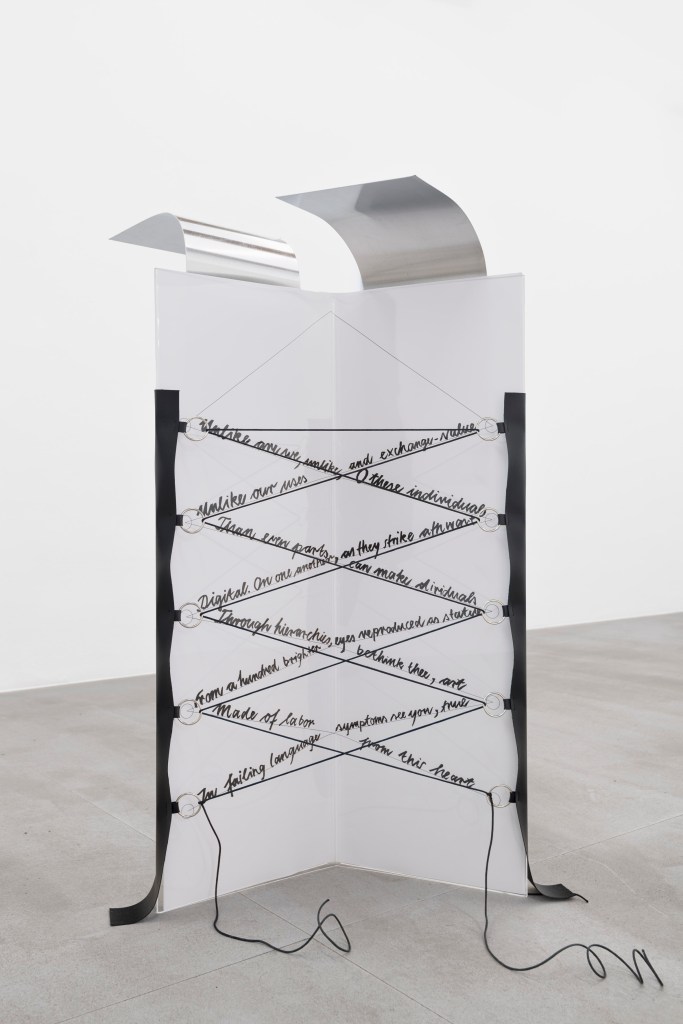
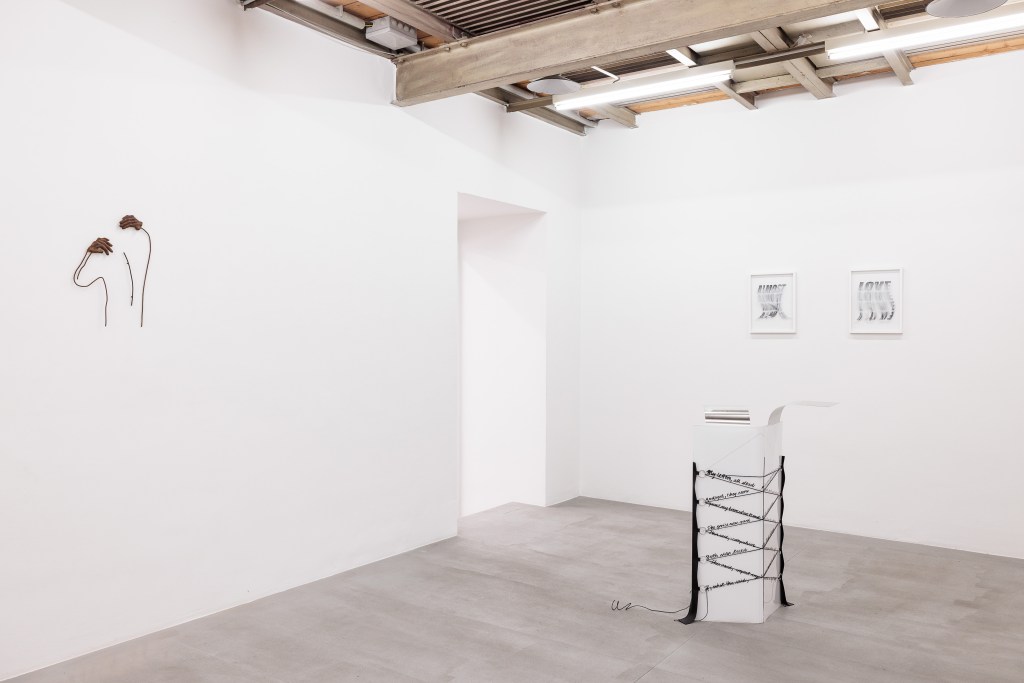
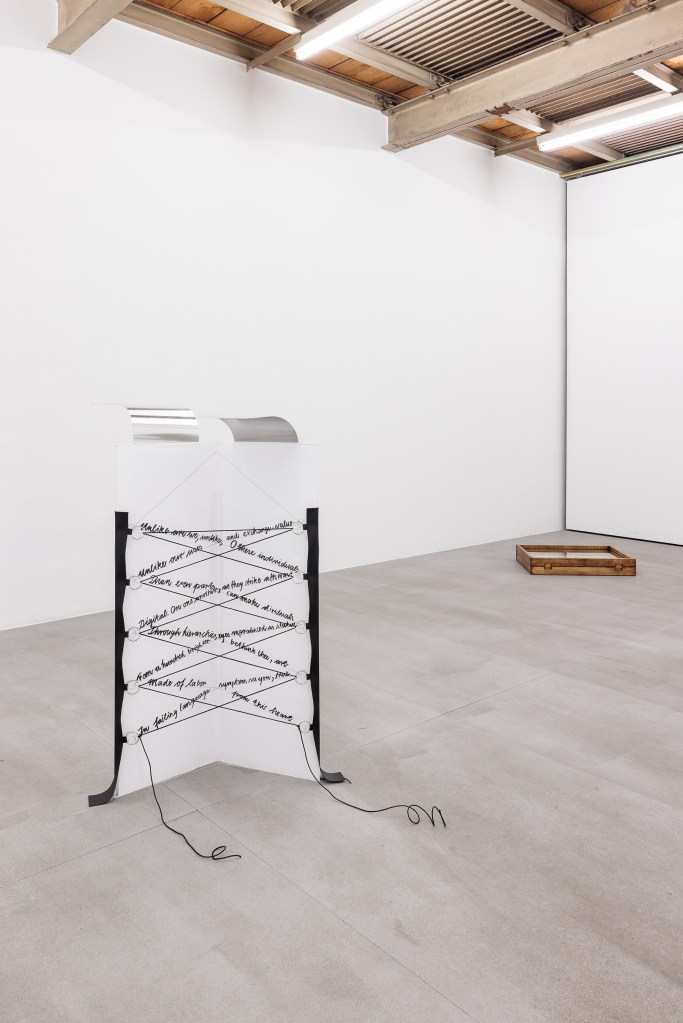
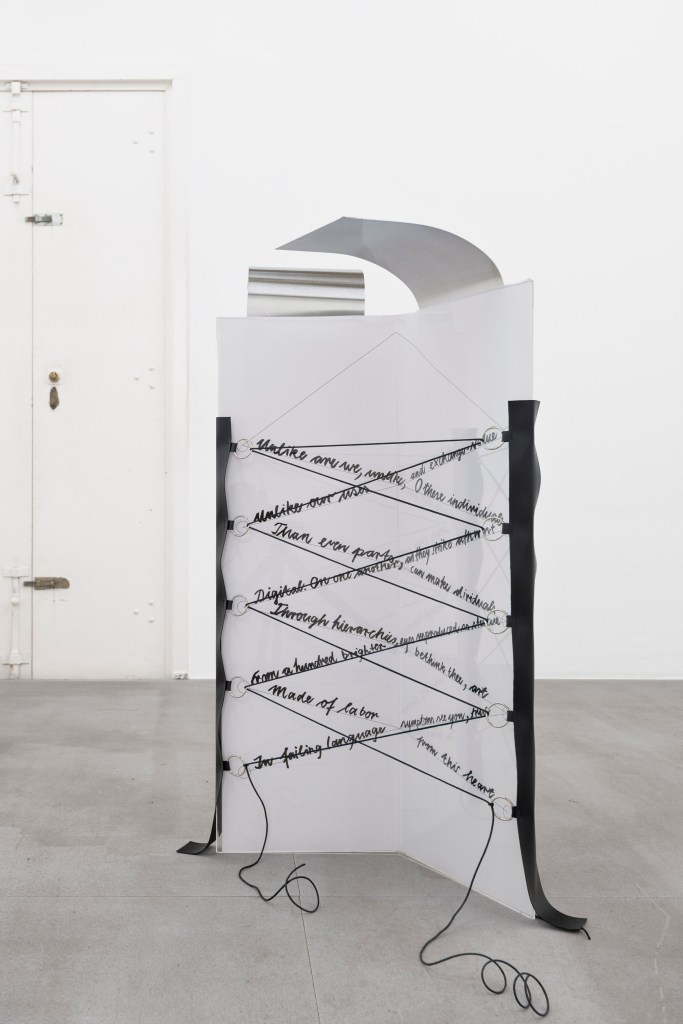
90x55x30cm, plexiglass, aluminium, paper, cactus leather, metal rings, string, curated by at Gallery Krobath Vienna
In this work, I bring together two elements: the structure of an economic diagram and two poems. The zigzagging lines are based on the Tableau Économique, the first diagrammatic representation of an economic system, developed in 1759 by the French economist and physician François Quesnay. The diagram illustrates the circulation of money and goods between different social classes. The string corset holds the object together while simultaneously drawing on the structure and logic of the diagram. I have arranged the poems along these intersecting lines. They refer to Elizabeth Barrett Browning’s Sonnets from the Portuguese, written around 1845–1846 and first published in 1850. The 44 love sonnets are also connected to Browning’s engagement with questions of equality, autonomy, and the independence of female writers. For my work, I have further related them to the process of the artistic production itself. This creates a connection between the personal and romantic dimensions of relationships and their economic dimension, bringing love, labour, (inter-)dependency, and production into dialogue with one another.
Unlike are we, unlike, O these individuals
Unlike our uses and exchange-value
Than even parts can make dividulas
Digital.
On one another, as they strike athwart
Through hierarchies though, bethink thee, art
From a hundred brighter eyes reproduced as statue
Made of labor from this heart
In failing language symptoms see you, true
My letters, all dead paper, mute and white
And yet, they seem alive and quivering
Against my tremulous hands which loose the string
The price was paid with shivering
This said, – compulsive to remain within sight
Both sides laced for tight fitting
This said, – repeat my words on quitting
If, what this said, I dared repeat to cite
Photos: Peter Mochi

