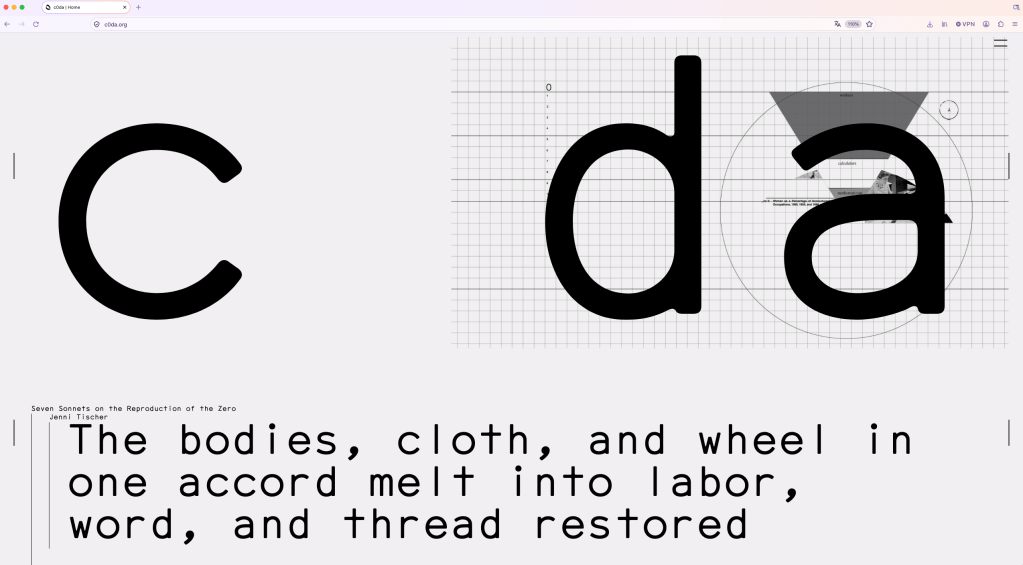
c0da is a research project and publishing platform conceived by artist Katrin Mayer that deals with feminist modes of coding and writing.
Fragments of text and images drawn from my archive of long-term research condense into the structure of a sonnet. The mathematical rhythms of the sonnet constitute the grid; the lines of warp and weft condense or dissolve. Reflections and analysis on class, reproductive labor, leisure, working female bodies, and dreaming weave together around the spinning wheel as an indexical point of departure for a counter-diagram. In what ways do processes of abstraction constitute (working) bodies – from the history of the mechanization of looms to the first computers and the accumulation of personal data?
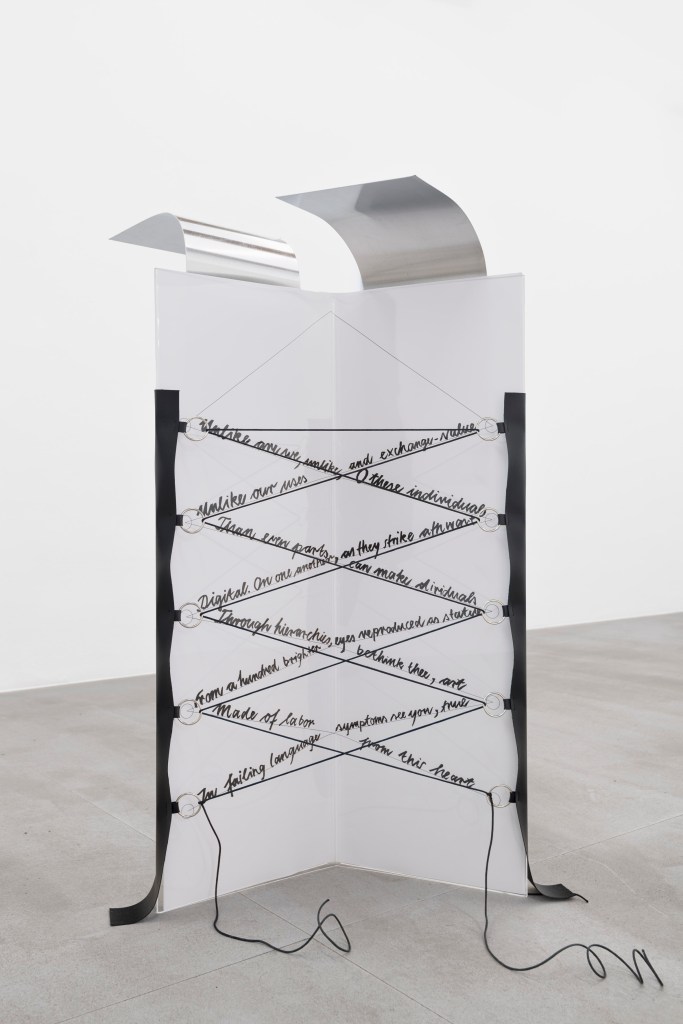
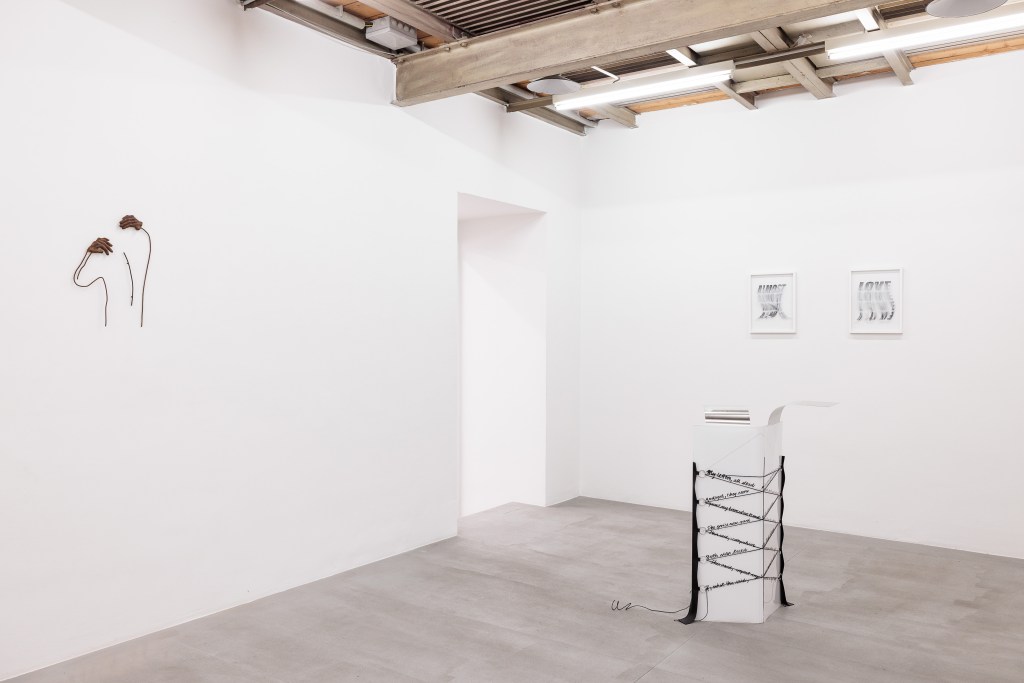
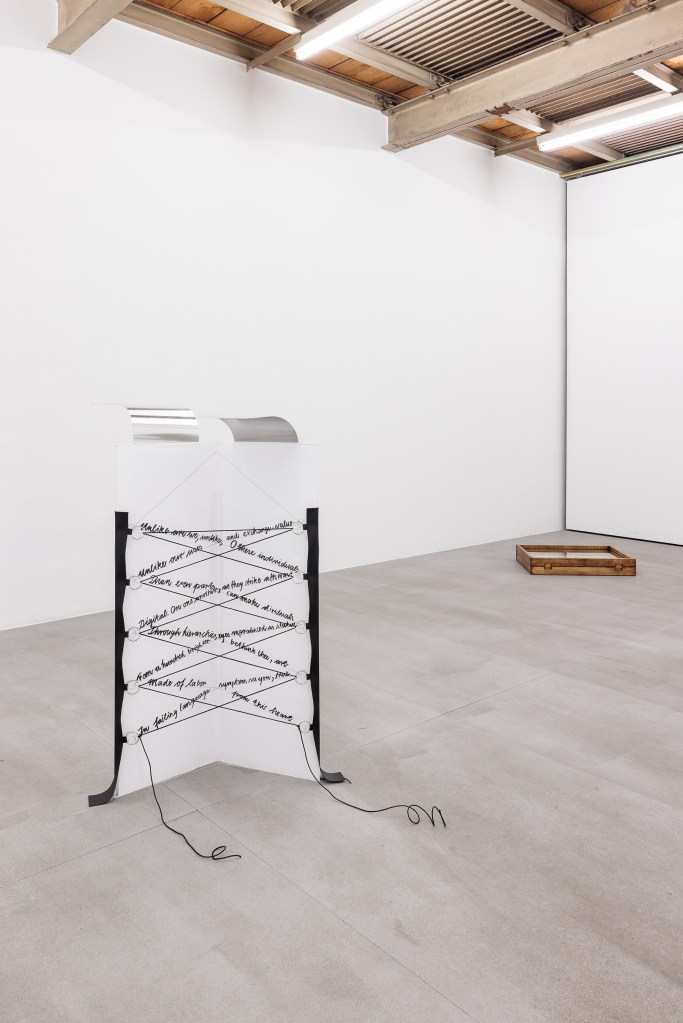
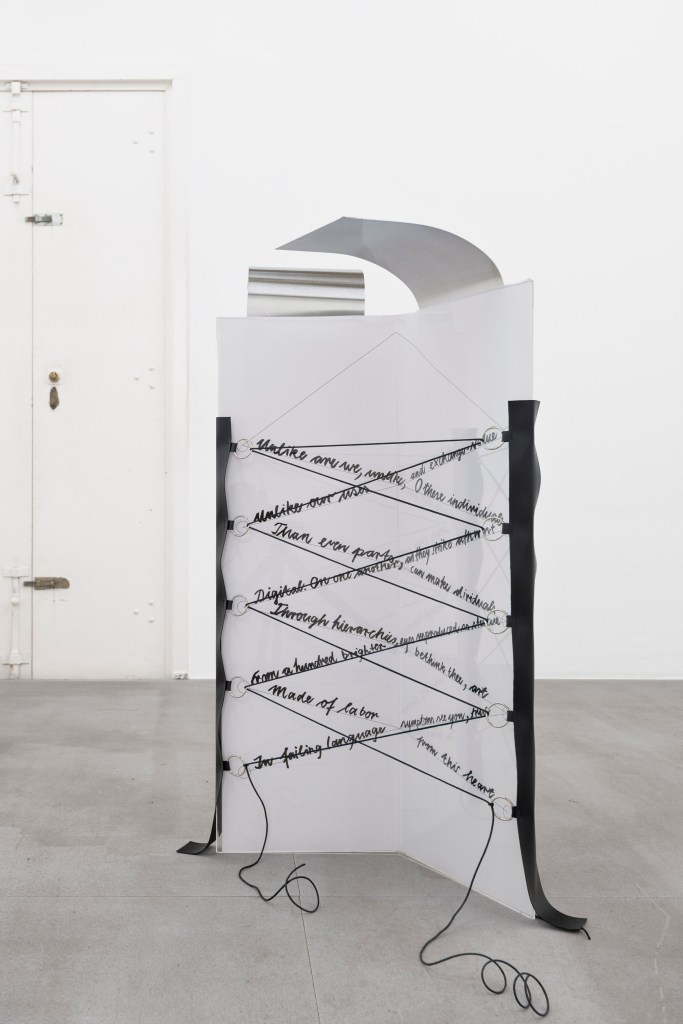
Unlike are we, Unlike (They Call it Love), 2026 90x55x30cm, plexiglass, aluminium, paper, cactus leather, metal rings, string, curated by at Gallery Krobath Vienna
In this work, I bring together two elements: the structure of an economic diagram and two poems. The zigzagging lines are based on the Tableau Économique, the first diagrammatic representation of an economic system, developed in 1759 by the French economist and physician François Quesnay. The diagram illustrates the circulation of money and goods between different social classes. The string corset holds the object together while simultaneously drawing on the structure and logic of the diagram. I have arranged the poems along these intersecting lines. They refer to Elizabeth Barrett Browning’s Sonnets from the Portuguese, written around 1845–1846 and first published in 1850. The 44 love sonnets are also connected to Browning’s engagement with questions of equality, autonomy, and the independence of female writers. For my work, I have further related them to the process of the artistic production itself. This creates a connection between the personal and romantic dimensions of relationships and their economic dimension, bringing love, labour, (inter-)dependency, and production into dialogue with one another.
Unlike are we, unlike, O these individuals Unlike our uses and exchange-value Than even parts can make dividulas Digital. On one another, as they strike athwart Through hierarchies though, bethink thee, art From a hundred brighter eyes reproduced as statue Made of labor from this heart In failing language symptoms see you, true
My letters, all dead paper, mute and white And yet, they seem alive and quivering Against my tremulous hands which loose the string The price was paid with shivering This said, – compulsive to remain within sight Both sides laced for tight fitting This said, – repeat my words on quitting If, what this said, I dared repeat to cite
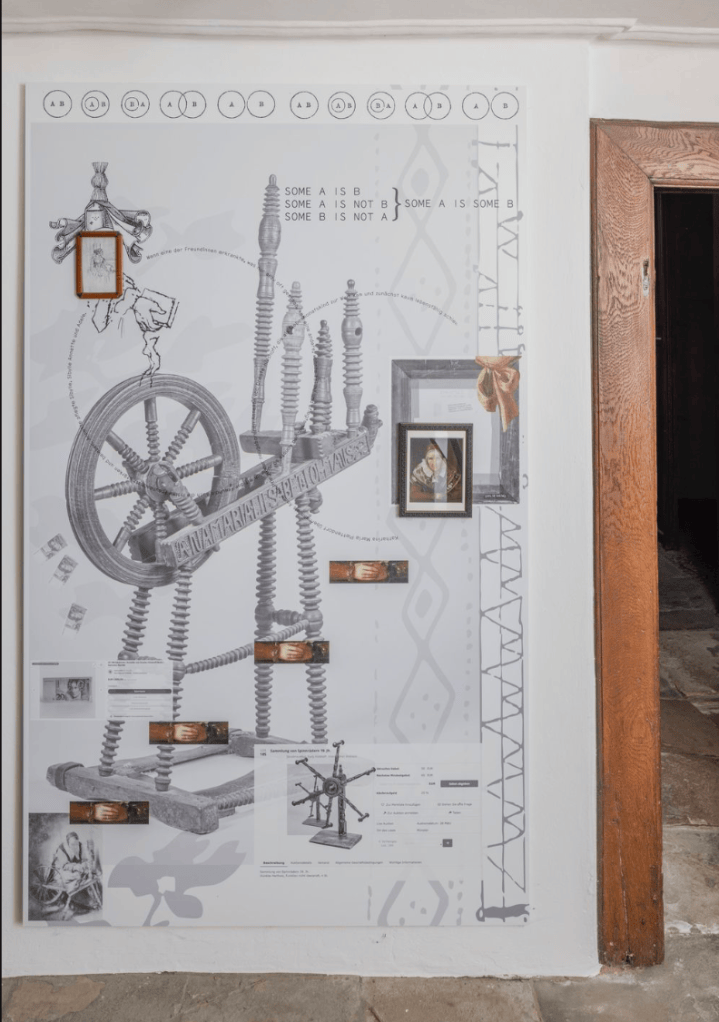
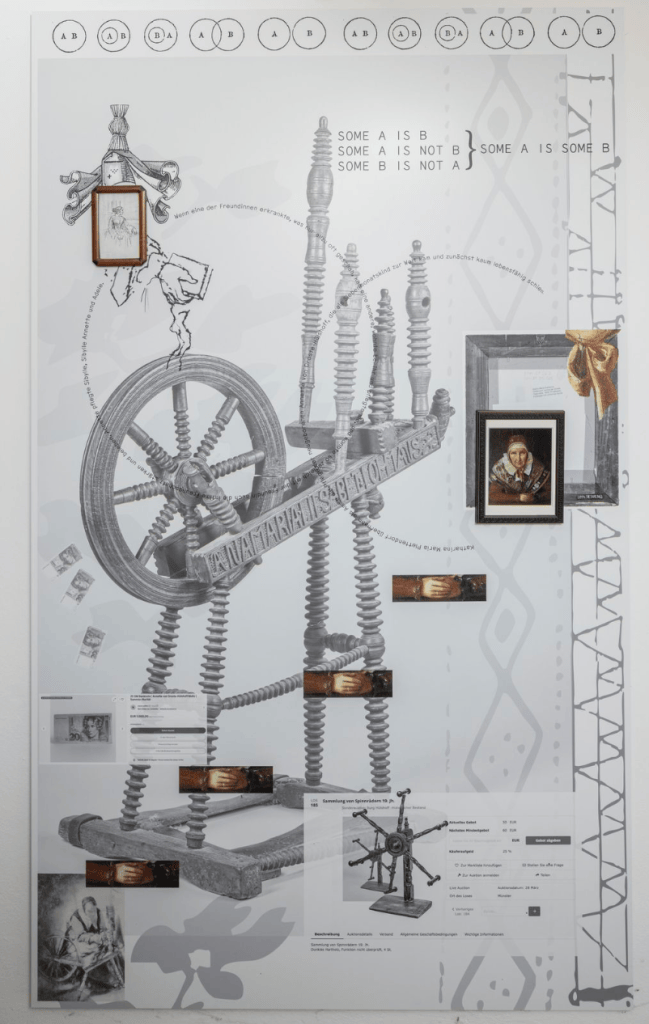
3 parts: Alu-Dibond panel, 120 × 200 cm; two Alu-Dibond panels, each 30 × 40 cm; two paintings: Bildnis Maria Katharina Plettendorf, Amme von Droste, colour reproduction of the oil painting by Johannes Sprick, 1838; Annette von Droste-Hülshoff auf der Meersburg, drawn by Jenny von Droste-Hülshoff (later von Laßberg), 1846; braid, cotton, produced on the Barmer Flechtmaschine by Gold-Zack, Bandwebermuseum, Wuppertal, 2026.
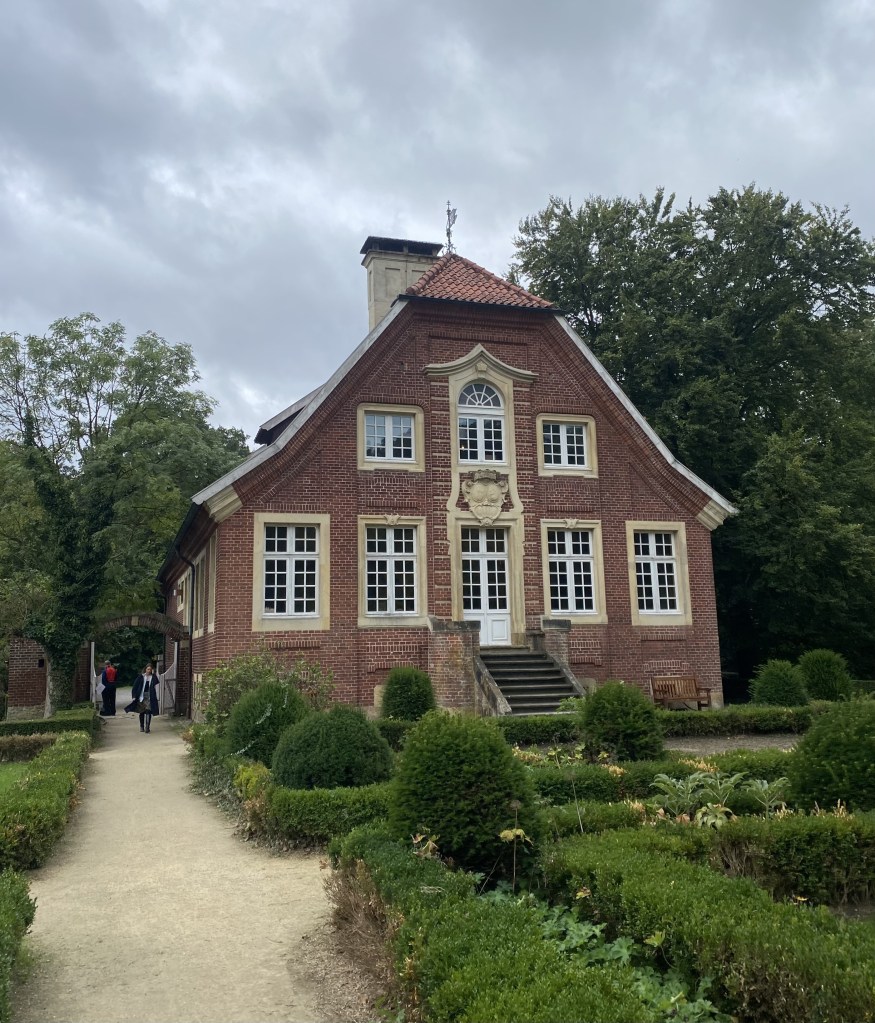
For the permanent exhibition Droste Welten, curated by Jenni Bohn, Katrin Mayer and Jenni Tischer developed the collaborative work Tableau Économique, which is on view at the Rüschhaus, the former home of the writer Annette von Droste-Hülshoff. The Tableau presents a diagrammatic image that explores the economic relationship between the wet nurse and weaver Maria Catharina Plettendorf and the writer and composer Annette von Droste-Hülshoff. Both women lived and worked together at the Rüschhaus. Coming from different social classes, their respective forms of labour were fundamentally unequal: thanks to her class privilege, Droste was able to devote herself entirely to writing, while Plettendorf worked as a wet nurse, spinner, and weaver. The structural conditions of their lives and labour are interwoven here into a portrait of distinct forms of female productivity, expressed through spinning, weaving, and writing.
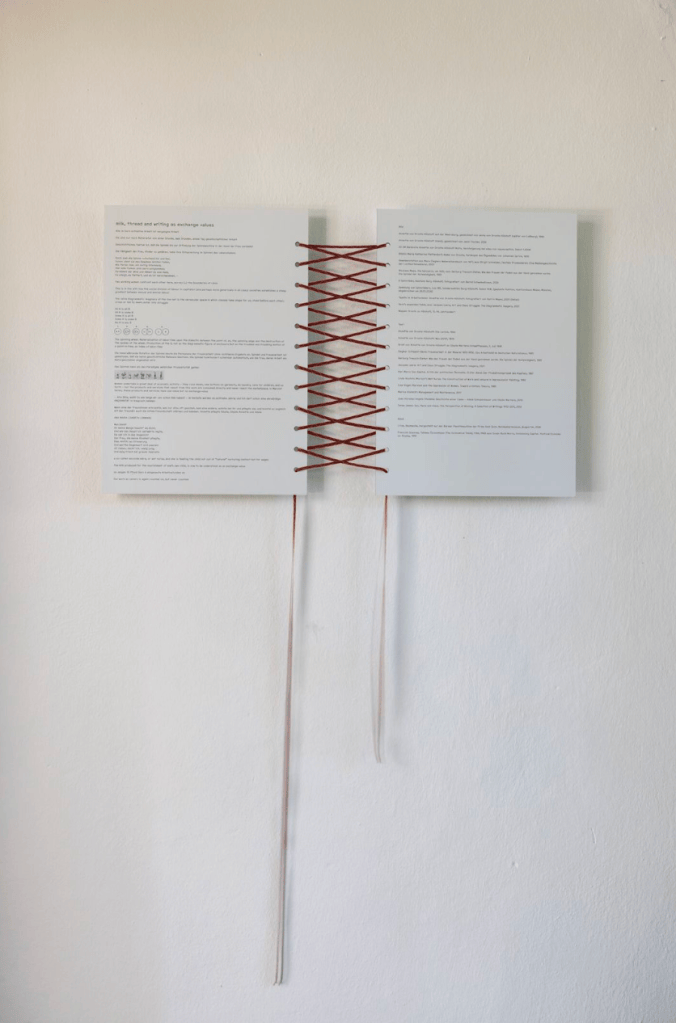
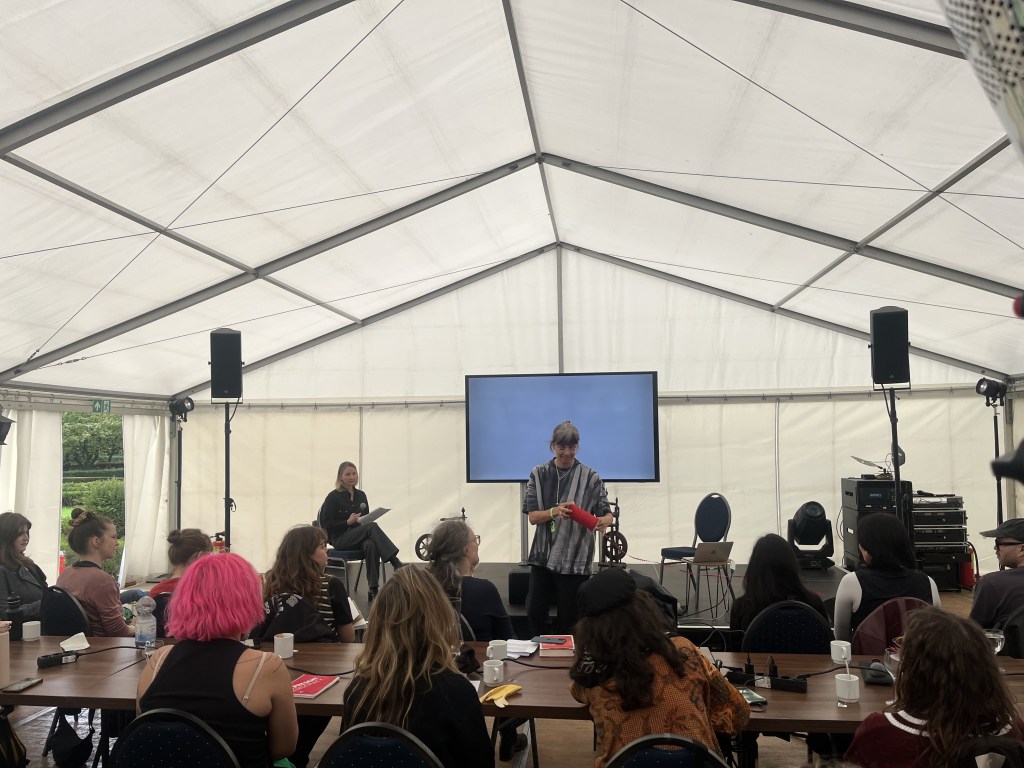
As part of the exhibition, we contributed to the workshop An die Schriftstellerinnen (3–6 September) for which we translated the materials of the diagram into a dialogical, visual, and textual essay.
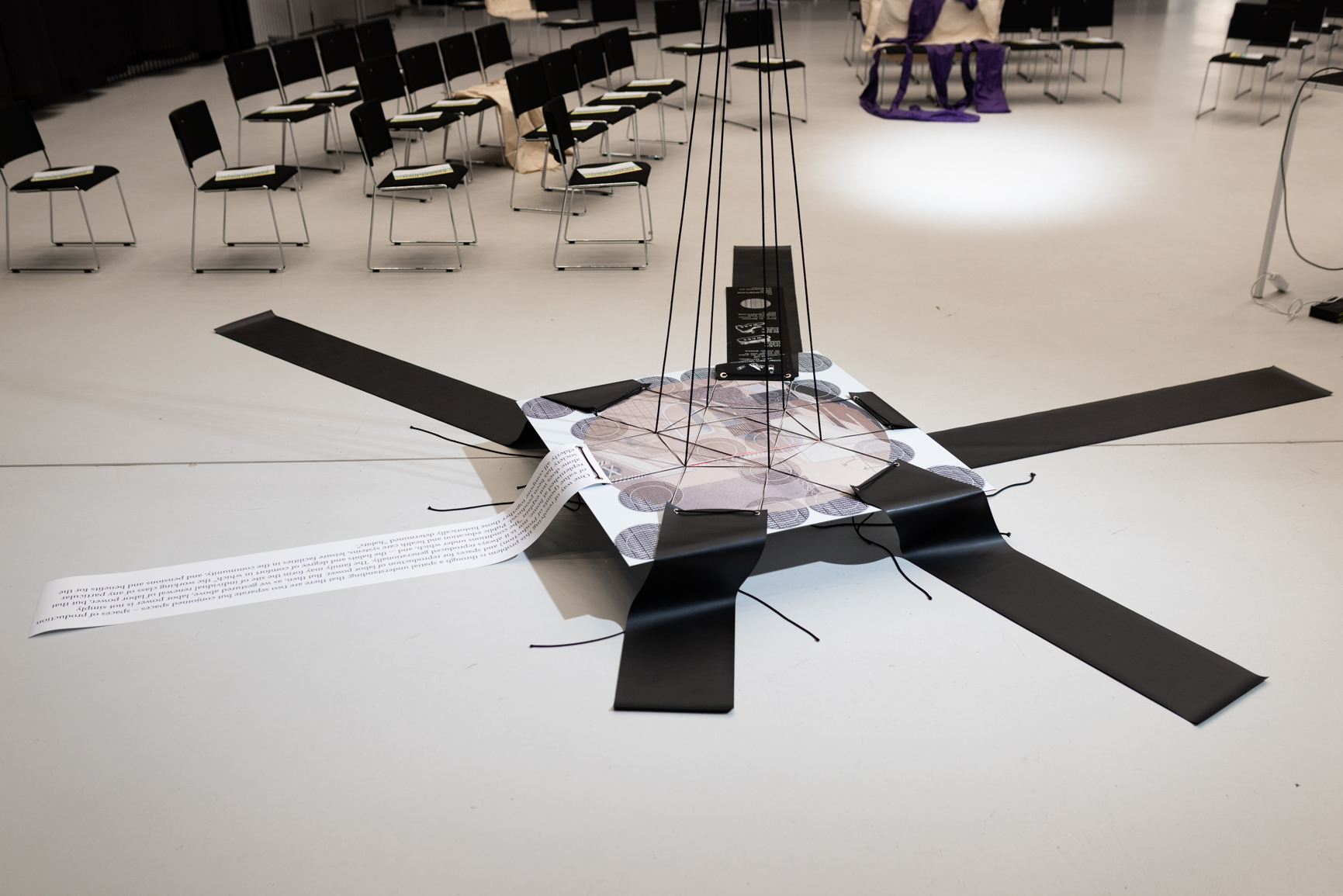
print on Alu-Dibond, text on paper (Social Reproduction Theory. Remapping Class, Recentering Oppresion, Thiti Bhattacharya (ed.), 2017), print on paper (Working Through: Friedl Dicker, Margit Téry, Mordecai Ardon – Das Kapital (Skript), ca. 1933), rope, weft thread, ca. 360 × 360 × 200 cm.
The installation “Diagrammatic Image (b) Llano del Rio” examines the infrastructures of reproductive labor. The diagrammatic image refers to the urban plan of the never-realized garden city of Llano del Rio, designed in 1914 by the feminist-communist architect Alice Constance Austin in Llano, California. In Llano del Rio, reproductive labor was to be centralized and communally distributed through a star-shaped infrastructure. This would have materially transformed “social reproduction” in its dual meaning: both as the repetitive, everyday labor required to sustain life and as the ongoing reproduction of the conditions of production through institutions. The schematic image of the garden city proposes an alternative form of social organization, based on a structural reconfiguration and revaluation of reproductive labor as an essential social and economic force. Representations of utopian coexistence, such as that envisioned in Llano del Rio, not only illustrate alternative forms of organizing labor but also continually constitute us as the potential subjects of these imagined worlds.
Detail: Working Through: Friedl Dicker, Margit Téry, Mordecai Ardon – Das Kapital (Skript), ca. 1933
January 22, 2025, 6 pm, University of Applied Arts Vienna
The lecture performance addresses infrastructures of reproductive labor. Tischer performatively revisits historical diagrammatic representations of the unrealized garden city Llano del Rio in California designed by the feminist-communist architect Alice Constance Austen. The artist will reactivate this unexplored and forgotten utopia and question the spatio-temporal and material arrangement of knowledge accumulation and the possibilities and limits of its abstract form of representation.